Thursday, May 12, 2016


The Planning Process for Fieldwork
 The planning process is always a very lengthy process in order to create engaging lessons that are meaningful for students. I was in group 3 with two of my classroom peers. We were assigned to focus on the earth science aspect of science. When reviewing the textbook that the students were referring to in that classroom, we realized that there were many aspects of earth science and it was difficult to pick just one. I remember looking at a section about the three types of rocks and I felt that this would be a fun topic to explore. I always liked this specific topic of earth science during the early years of my education. After some discussion with my peers, we all agreed on focusing on the three types of rocks.

 Before we could start making the lessons, we needed to re-fresh our minds about the three types of rocks. We knew that we needed to teach specific information about each type of rock to the class in our direct instruction lesson. We each chose one type of rock and used the textbook and research articles in order to learn more about the type of rock. I explored more about metamorphic rocks. We would each find information, make notes, and condense it into the PowerPoint on Google Slides. This was a great PowerPoint Tool because we could each work on whenever we wanted and could see what we each contributed.

 After finding all of our information, we started planning what guided practice activities we would do for the direct instruction and what the activity would be for the indirect/inquiry instruction. We researched many different activities and added a twist of our own style to what we found. Everything else that came with planning for the lesson plans and activities came from us being in constant contact with one another. We would work individually and then meet up constantly to share our ideas and make sure that they flow.

Making sure that each group member had a role was an important part of the planning process. By doing this, each person in the group is participating and bringing new ideas. We also learned that working on the lessons early on also benefited us. Lesson plans take a lot of hard work and dedication. A lesson will only be effective and engaging to students if a lot of hard work and time are put into them.
Reflection on Science in the News

"Experts Debate the Best Spots for Astronauts to Land on Mars Someday" by Scientific American (Newsela)
What is the science issue involved: It is revealed that for the first time, astronauts will be creating a home base on Mars in order to find any life on this planet and possible sites for humans to live on one day. Experts are still trying to decide what areas they should land in due to risky effects of contamination and whether humans can survive on a frozen desert. "If there is life somewhere on Mars, it has been around for billions of years, scientist Steve Clifford said. We do not have the right to put that life at risk. It would be a terrible thing if we were to kill off the first living thing we come across in outer space, he said. In the end, the experts at the meeting could not agree on a place to land. About all they could agree on was that more study is probably necessary."
Why did you choose it? I thought that this was a very interesting article. I have heard that there was a lot of talk about making a trip to Mars and the possibility that humans will one day be able to live on Mars. I find it interesting that Mars is the only planet that humans could live on and that there may be some form of life out there in outer space.
 How does this current topic relate to the classroom discourse? This topic is on astronomy, specifically on the planets and solar system. We learned in this course about astronomy and how it is important for teachers to be up to date with what is occurring in all aspects of the science fields so that the students will be able to see what is being done with science today. This is important information because these students might be the ones who will live on Mars one day. The students are the future and it is important that they learn about the planets and the possibilities that are there in the future.

 How can you use the news articles in teaching science? Teachers can use news articles in many ways in the classroom. When teaching students about a certain area of science, teachers can teach the students the information and then present them with a news article to show why this is important today. For example, teachers can teach students about astronomy and the planets. After teaching the students about Mars, teachers can present them with the news article and show the students what is happening with Mars today and why it is important that we are learning about it. Teachers can also have students research various news articles and combine their findings with their classmates to show how much they learned about a specific area of science in the news today. For example, they could combine articles about Astronomy and then combine their peers articles about Astronomy in order to gain a deeper knowledge about it in what is occurring today.

Scientific American (2016) Experts debate the best spots for Astronuats to land on Mars someday. Newsela. https://newsela.com/articles/mars-exploration/id/15850/.
Reflection on Research Article Review
 In order to develop skills and be up-to-date with science when teaching this subject in the classroom, it is important that teachers are constantly reviewing research articles. By reading research articles, teachers can develop a deeper understanding of what they are teaching and can apply the new skills that they learned in the classroom so that students can get a strong experience from what they are learning.
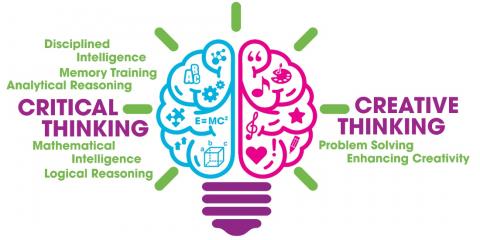
The research article that I chose is called, "Thinking Creatively about Science: Suggestions for Primary Teachers" by Karen S. Meador. In this article, the author discusses how students are able to really learn through experiences, discoveries, and creative thinking skills. It is important that students use their creative thinking skills in science in order come up with ideas and think outside of the box. The author stresses that this is an important skill that scientists need to have. She states that "Even though our students will not all become scientists, it is important to initiate creative thinking within academic content, maximizing the potential of those who do choose this profession. Additionally, all students who learn to think creatively, while engaging in scientific endeavors, hone skills applicable to other contents" (26). Creative thinking skills are not only important for scientists but for the majority of all professions. This can also help beat the stereotype that only smart men can be scientists. By stressing to students that they have strong creative thinking skills just like real scientists, this can inspire many students to want to be scientists one day. A teacher is a role model who can take their passion about science and make students passionate about it too.
 Creative thinking skills can install a sense of flexibility in the minds of the students when learning about science. Meador states that "In science,
flexible students think of different
types of variables that may impact a phenomenon.
Flexible thinkers also have
the ability to look at things from multiple
perspectives" (26). This sense of flexibility can help students problem solving skills. These skills are crucial when using the process of inquiry during hands-on experiments. The students need to be able to come up with multiple ideas and communicate their thoughts in order to reach conclusions and gain a deeper understanding of what they are learning.
Creative thinking skills can install a sense of flexibility in the minds of the students when learning about science. Meador states that "In science,
flexible students think of different
types of variables that may impact a phenomenon.
Flexible thinkers also have
the ability to look at things from multiple
perspectives" (26). This sense of flexibility can help students problem solving skills. These skills are crucial when using the process of inquiry during hands-on experiments. The students need to be able to come up with multiple ideas and communicate their thoughts in order to reach conclusions and gain a deeper understanding of what they are learning.

This research article also shows how students will highly benefit from experiences and discoveries in the classroom. It is important that students get the change to be engaged and involved with science in order to develop a positive attitude about it and gain a deeper knowledge of it. Meador states "Primary educators set the stage for discovery and investigation by preparing an environment in which youngsters may encounter appropriate stimulation, igniting their sense of wonder and inviting questions" (26). The classroom should be a place where students can explore with appropriate and hands-on activities. It will make the students question more about what they are doing which is a good thing. As teachers, we want the students to be involved as much as possible in science and discovery things that they have never thought or heard of before. This is where they will really learn more about science and hopefully develop a passion for it.
 The research articles also gives various examples of classroom appropriate activities and experiments that students can be involved in when it comes to science. For example, one of the activities is called "Attribute Socks" where students use their senses and practice their observation skills. In this activity, "Students practice observation using
touch, smell, and sound as they determine
the attributes of objects placed
inside socks. The socks are tied at the
top so students cannot see the objects" (27). Using observation skills is an important skill that scientists need to use. This activity also let's the students imagination go wild by letting them express their creative thinking skills. This is just one of the many activities that this article provides.
The research articles also gives various examples of classroom appropriate activities and experiments that students can be involved in when it comes to science. For example, one of the activities is called "Attribute Socks" where students use their senses and practice their observation skills. In this activity, "Students practice observation using
touch, smell, and sound as they determine
the attributes of objects placed
inside socks. The socks are tied at the
top so students cannot see the objects" (27). Using observation skills is an important skill that scientists need to use. This activity also let's the students imagination go wild by letting them express their creative thinking skills. This is just one of the many activities that this article provides.

I chose this article because I was fascinated by this stress on creative thinking skills. I have never considered this to be a skill that would be important to science. I always thought that this was important for something like creative writing. This article taught me a lot about teaching science and I will apply this stress on creative thinking skills in my future classroom.
Meador, K. S. (2003). Thinking Creatively about Science: Suggestions for Primary Teachers. Gifted Child Today, 26 (1), 25-29.
Reflection on the Science Fair Project

Science fair projects are extremely popular in the elementary and middle school grades. I have heard of science fair projects before but I had never participated in one myself. I remember my elementary school hosting a science fair event but it was optional to students. My friends who participated in the science fair enjoyed the process of doing their experiments and learned a lot from the process. There are many things that you need to keep in mind when creating your science fair project. It is important when creating your science fair project that you know the scientific method and that you are using the process of inquiry.
I discovered the penny experiment. I thought that this was an interesting experiment and I wanted to try it for myself. I also picked it because it flowed well with the scientific method and inquiry process that I was trying to keep in mind with. The question that I posed for my science fair project was, “which type of water will a penny hold more: soapy or regular water?” In this experiment, I needed to see how many drops of each kind of water could the penny hold. I would have to use a dropper so that I could drop one drop of water at a time while I count. My hypothesis was that the penny will hold more regular water than soapy water. The materials consisted of 2 pennies, regular water, soapy water, 2 droppers, paper towels, 2 beakers, petri dish, data table paper, and a pencil. I started off with performing the experiment first with regular water as I counted how many drops would fit on the penny. When the water would all spill over, I would record how many drops it took in the data chart. I then did the same but with soapy water. After collecting my data, I performed the experiment one more time so that my data would be accurate. I then analyzed my data and I came to the conclusion that the penny was able to hold more regular water than soapy water. I conducted research for my conclusion so that I could discover what it was that exactly hold the water together more compared to soapy water. Through my research, I discovered that regular water has a stronger bond of water molecules that hold together. With soapy water, the water molecules become more spread out and the bondage is weakened. This is why the soapy water was not able to hold on to the penny longer compared to regular water. My catchy title was, “It’s Raining Pennies!” I thought this would be an engaging title because dropping the water on the pennies reminded me of raindrops falling. This also inspired me to make my poster background water droplets and to put pennies along the border of the poster. I learned a lot about water molecules during this experiment. This new knowledge is helpful to know when it comes to science.

 This project will thoroughly help students to learn more about water molecules when it comes to physical science. Science Fair projects in general will help students to expand their knowledge on science and students can learn more about different areas in science through the projects that their peers present. An online resource that teachers can use to discover more science fair project examples is from the “Science Fair Warm Up” article. It has many ideas for science fair projects if your students are struggling to come up with ideas. Science Fair projects are a great way for students to learn more about science and be engaged with it.

Friday, May 6, 2016
Reflection on the Trade Book Project
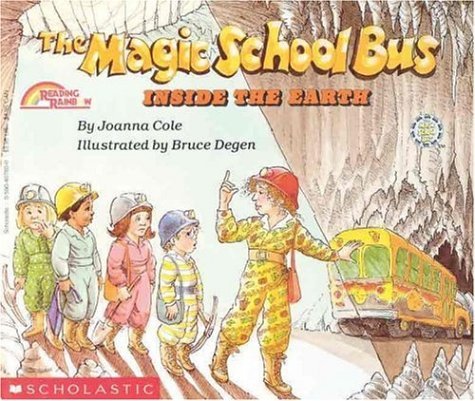 Dr. Smirnova assigned us a project where we have to pick a book that is similar to our fieldwork unit plan and create a book talk trailer. I picked the book, "The Magic School Bus: Inside the Earth" by Joanna Cole because my unit plan was centered around earth science on the specific topic of the three types of rocks.
In the story, Mrs. Frizzle decides to take the students on her magic school bus to learn about rocks and the process of how they are formed. Mrs. Frizzle first started on talking about what is a rock and then brought the students on a journey to dig through the earth's crust. Mrs. Frizzle taught the students about soil. She then transitioned into explaining what Sedimentary rocks were and how they were formed as the students were digging and discovering these rocks. The bus went deep into the earth and the students discovered Metamorphic rocks as the teacher discussed interesting facts. The bus went even deeper and the students discovered Igneous rocks. These types of rocks were found in the earth's crust and in the mantle. As Mrs. Frizzle was describing each type of rock, the students would point out the names of the rocks that they discovered for each type. Mrs. Frizzle made the bus go into the layers of the earth starting from the crust, to the mantle, to the outer core, and eventually to the inner core. The magic bus was able to come back onto the earth's surface through a volcano. At the ending of the book, the students were able to tell what each type of rock was and presented their own examples of the types of rocks.
 This is a great story for teachers to use to introduce the lesson on the three types of rocks. This story really breaks down how each type is formed, the characteristics, and some examples of each one. It would be helpful if teachers would read this story to the class and have them take notes on the important information that they found on each type of rock. If the teachers made a lesson on identifying which rock belongs to which type of rock, the students could use these notes as a guide.

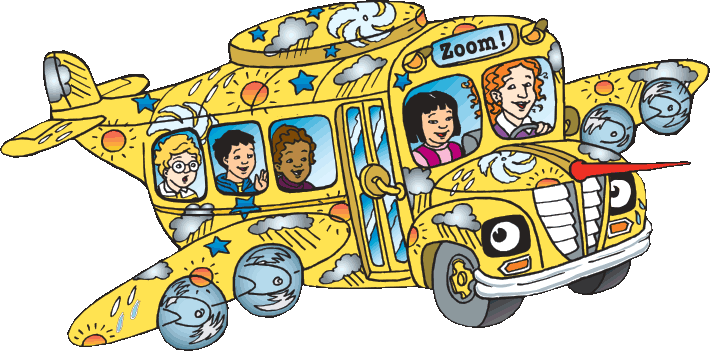
Through this trade book project, I have also learned how this book would be an effective book to use in the classroom. There are many activities that can be done with this book. A way that teachers can get their students engaged with the book is by first showing them a book trailer. I created a book trailer to use to get the students wanting to know what happens in the story. I used the Animoto tool to create my trailer. It was very simple to use and I had a lot of fun with it. Teachers should definitely be making book trailers, especially if they need more help with engaging their students. Here is the link to my Animoto book trailer on this book.
Monday, May 2, 2016
Reflection on the Film, "Home"

My professor assigned us to watch the film, "Home" (2006), and to reflect in a statement or two on protecting the Earth's Habitability. There were multiple parts and roles of science for my classmates to choose and focus on during the film including: life, earth, space, physical science and engineering. I choose to focus on the earth science aspect of the film.
As I was watching this film, I was deeply moved. The camera footage was unbelievably beautiful and really showed various parts of the Earth that I have never seen shown before like this. It shocked me to see that the majority of the footage of the Earth showed how human activity affected the environment. The voice of the narrator described what was really happening in the Earth and spoke in a manner that could not be ignored.
 I feel that I learned so much about the Earth in the short amount of time that this film provided. I learned that land, water, and life combined create a certain balance with everything and every being having a role to play. Agriculture is what started this change in the environment of the Earth. The land was greatly appreciated back in time and still today in other countries because their daily concern is to feed themselves by extracting from the land only enough to live on. This is extremely important because we are not being responsible consumers and are forgetting how scarce some resources can be.

 In nature, everything is linked. Our constant need for oil and energy has destroyed the Earth and has affected our resources. Human behavior has shaped the Earth by creating toxic pesticides, excessive mining, extinction, water shortages, deforestation, global warming, droughts, wildfires, and excessive CO2 leveling. We need to take action now in order to protect our home. We can do many things to do this and every person can make a difference. It is important that we educate one another about the reality of what is occurring on Earth. It is also important that we join and adapt organizations to put an end to the damage that we causing to Earth.

This is a great film that can especially be used in the classroom. Teachers can use this to teach students about the Earth and/or global warming. It can also be used to help people learn the truth of what is happening on Earth and encourage others to take action and protect our home.
Subscribe to:
Posts (Atom)